Introduction
Lately, the same question keeps surfacing in board meetings, phrased a dozen different ways but always pointing at the same thing: how do we use AI to stay competitive? It is not a bad question. But after three decades of watching companies chase the next big thing, I have come to believe it is not the right question to lead with.
The harder, more useful question is whether we are actually prepared to lead the organizational change that comes with the technology, rather than simply adopting the technology itself.
A Pattern That Keeps Repeating
That distinction has played out the same way for as long as I have been doing this work. Mainframes, then PCs and the early internet, then ERP and CRM systems, then the cloud, and now AI. Each wave arrives with genuine promise, and each one leaves behind a trail of budgets that ran long and results that fell short.
Looking back across all of it, the technology itself was rarely the reason things went sideways. It was almost always the people side: the assumption that a good enough tool will manage behavior, communication, and buy-in on its own. That never happens automatically, no matter how good the software is.
This is precisely what change management is built to address. John Kotter spent decades at Harvard studying why transformations succeed or fail, and his conclusion holds up across every wave mentioned above. What matters more than the sophistication of the tool is:
- A genuine sense of urgency across the organization
- A committed team leading the effort
- A shared vision everyone can point to
- The discipline to keep adjusting as you go
The data backs this up. Prosci’s research shows that projects run under strong change management meet or exceed their objectives roughly 88 percent of the time, compared to somewhere near 13 percent for those that treat it as an afterthought. That gap is not a rounding error. It is the difference between a technology investment that pays off and one that quietly becomes a write-off.
What Hershey’s SAP Rollout Still Teaches Us
Hershey’s 1999 ERP rollout is one of the clearest illustrations of what happens when readiness gets sacrificed for speed.
- The company rolled out SAP, Siebel CRM, and Manugistics all at once
- The timeline had already been compressed from roughly four years down to thirty months
- Leadership chose to go live right before Halloween, the busiest stretch of the company’s entire year, leaving no room for anything to go wrong
Something did go wrong. Orders stopped moving, warehouses filled with candy that could not reach shelves in time, and by the time the dust settled, Hershey had lost roughly $112 million in sales during the one season it could least afford it. It remains one of the most studied ERP failures in business history, not because the software was flawed, but because the people running the project decided speed mattered more than readiness.
AI Is Wearing the Same Optimism
I see the same reasoning showing up in AI projects today, just dressed a little differently. Leaders say:
- The technology is so good that adoption will take care of itself
- There is no real need to redesign how work gets done because the tool will simply plug into existing workflows
- Governance can wait until after deployment
- Ownership can be sorted out once the value has already been proven
None of that is malicious. It is optimism, the same optimism that pushed Hershey to go live before Halloween, and the research shows it is just as costly this time around.
- Somewhere between fifty and seventy percent of ERP and CRM projects fail to meet expectations
- RAND’s research puts AI project failure north of eighty percent
- MIT’s Project NANDA found that ninety-five percent of enterprise GenAI pilots have not produced any measurable return at all
The Shift That Makes This Moment Different
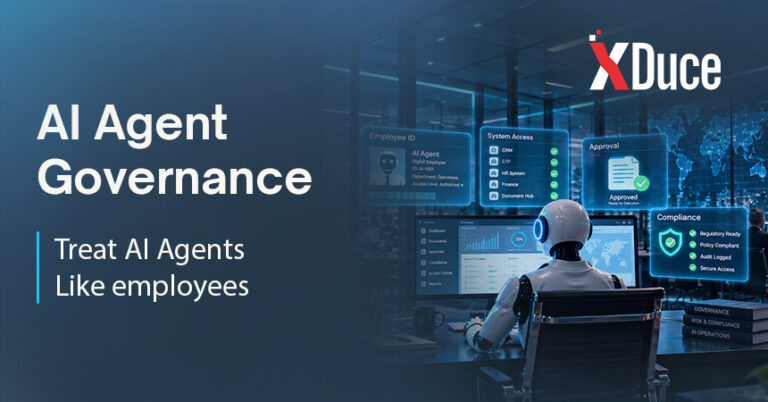
What makes this moment different is that AI is not simply executing tasks faster the way earlier automation did. It is increasingly making decisions on its own: recommending outcomes, flagging risk, shaping who gets approved and who gets reviewed, often without anyone noticing the shift has happened.
That is not a speed improvement. It is authority moving from people to systems, and most organizations have not updated their governance to reflect it.
Putting People Back at the Center
The encouraging part is that this is a solvable problem, and it is solvable the same way it has always been: by putting people back at the center of the plan before the technology goes live, not after.
None of this requires reinventing how we lead. Kotter’s eight-step model really just comes down to questions most leadership teams never sit down and ask each other, starting with the first one: have we actually built a genuine sense of urgency across the organization, or have we simply assumed everyone feels the same pressure we do?
If your AI initiative feels stuck, look at your change management before you look at the technology itself.
Where This Leaves Leadership
This is the part of the work I care about most. Before helping a client deploy a new system or govern a new AI tool, the first questions are always:
- Who owns it
- Who is accountable
- How the people using it every day will be supported through the change
Technology creates the opportunity. Whether that opportunity turns into something real still comes down to leadership, and increasingly, it comes down to whether the people side got the attention it deserved from the very beginning.
How XDuce Helps
At XDuce, we prepare your organization holistically for successful AI and technology adoption. Beyond implementing the technology itself, we help your people, processes, and governance structures get ready for change so your investment translates into measurable business outcomes.
Through our strategic alliance, XDuce | DEV IT, we offer comprehensive AI Readiness Assessments designed to evaluate your organization’s preparedness across people, process, and governance dimensions. It’s the right first step before any AI or enterprise technology rollout.

Related Blogs