Introduction
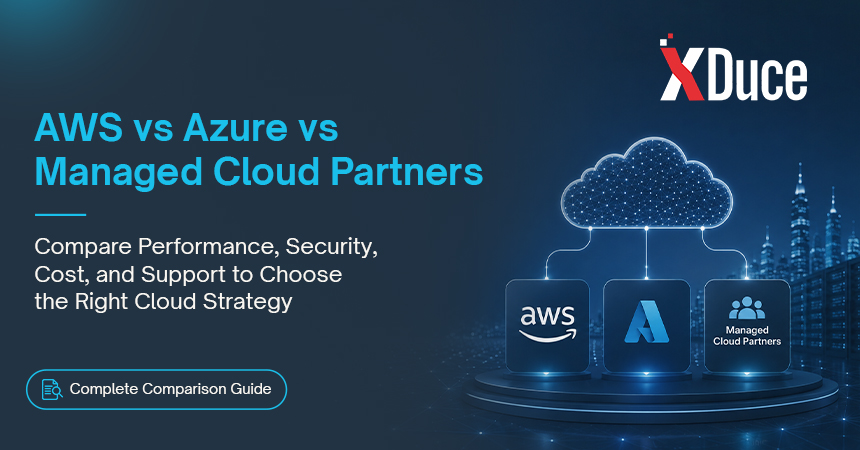
Choosing a cloud services provider is one of those decisions that looks simple from the outside and gets complicated fast once you actually sit down to make it. Everyone tells you cloud is the way forward, but nobody tells you how many paths lead there. Do you go straight to Amazon Web Services? Do you build on Microsoft Azure? Or do you bring in a managed partner who can guide the whole thing?
In our complete guide to what a cloud services provider actually does, we covered the basics of what these providers offer and why businesses rely on them. This piece goes a step further. We are going to break down the three most common paths businesses take when they move to the cloud, so you can figure out which one actually fits your business instead of guessing.
Why This Comparison Matters More Than It Seems
A lot of companies pick a cloud path based on what a competitor is using or what a salesperson recommended last quarter. That approach works out fine for some businesses and creates years of frustration for others. The truth is that AWS, Azure, and managed partners are not competing for the exact same job. Each one solves a different problem, and each one asks something different of your team.
If you are a growing company trying to decide between a direct cloud computing service provider relationship and a fully managed one, the right answer depends on your budget, your in-house technical skills, your compliance needs, and how much time you actually want to spend managing servers instead of running your business.
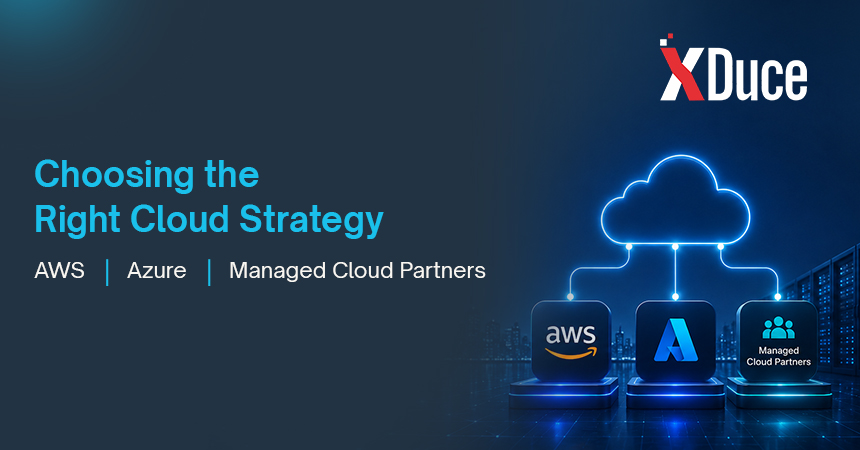
The Three Main Paths to the Cloud
Amazon Web Services (AWS)
AWS is the largest cloud platform in the world, and it earned that spot by offering an enormous range of services, from storage and computing power to machine learning tools and databases. Businesses that go direct with AWS usually have a technical team in place that can handle setup, security configuration, and ongoing management on their own.
- The upside: flexibility. You get access to nearly every tool available, and you can build almost anything on top of it.
- The downside: AWS puts the responsibility on you. If your team is not experienced with cloud architecture, it is easy to overspend, misconfigure security settings, or end up with a system that nobody fully understands six months later.
Microsoft Azure
Azure is the natural fit for companies already running on Microsoft products like Office 365, Dynamics, or Windows Server. It plays well with existing Microsoft environments, and many enterprises choose it because their internal systems are already built around Microsoft tools.
- The upside: a strong reputation in regulated industries, thanks to its compliance certifications and government cloud offerings.
- The downside: the same challenge that applies to AWS. Azure gives you a lot of power, but someone still has to manage it well, and that takes real cloud expertise.
Managed Cloud Partners
This is where a cloud services provider like XDuce comes in. Instead of choosing between AWS and Azure on your own and managing everything internally, a managed partner works across both platforms, and often others too, to design, migrate, secure, and maintain your cloud environment for you.
A good managed partner typically covers three roles at once:
- Cloud security consultant, watching for risk and exposure across your environment
- Project manager, keeping migrations and upgrades on track
- Technical support team, handling 24/7 monitoring, cost optimization, patching, and disaster recovery planning
You can see how this plays out in practice through our cloud computing consulting services, where the focus stays on migration, modernization, and long term management rather than just standing up infrastructure and walking away.
What to Actually Look For in a Cloud Services Provider
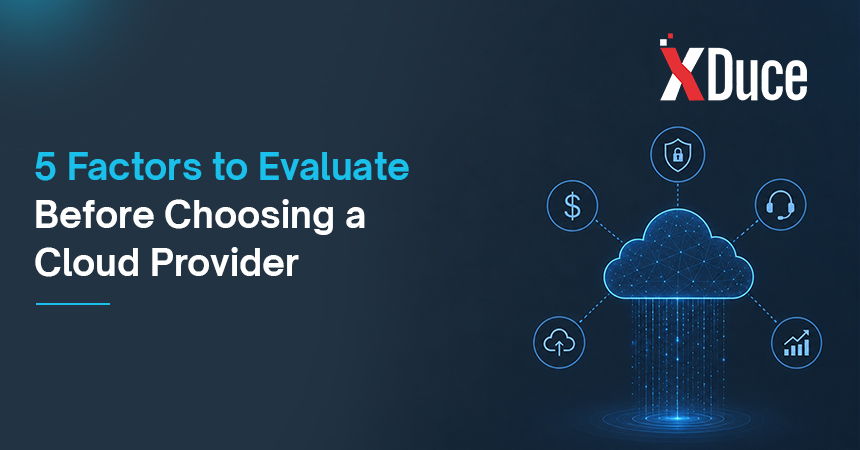
Before you sign anything, run through these criteria. They apply whether you are comparing AWS and Azure directly or comparing managed partners against each other.
Security and compliance. Ask how the provider handles data encryption, access controls, and industry specific compliance requirements like HIPAA or SOC 2. A provider that treats security as an afterthought will cost you far more in the long run than one that builds it in from day one.
Cost transparency. Cloud bills have a reputation for creeping up quietly. Look for a provider who can explain pricing in plain terms and who actively works to control costs rather than just billing based on usage.
Support availability. Downtime does not wait for business hours. Find out whether support is available around the clock and how quickly issues actually get resolved, not just how quickly they get acknowledged.
Migration experience. Moving from an old system to a new cloud environment is where most problems happen. A provider with a proven migration process, like the one outlined in our cloud native application development services, reduces the risk of downtime and data loss during the switch.
Scalability. Your cloud setup should be able to grow with you without a complete rebuild every time your business changes. This matters just as much for cloud solutions for small businesses planning their first real growth stage as it does for large enterprises adding new markets.
Cloud Services for Enterprises vs. Small Businesses
The comparison between AWS, Azure, and managed partners plays out differently depending on company size.
Cloud services for enterprises usually need to account for:
- Multiple departments with different priorities
- Strict compliance requirements
- Legacy systems that need to be integrated rather than replaced
- Detailed reporting across the whole organization
Enterprises often benefit from a hybrid approach, using both AWS and Azure for different workloads, with a managed partner coordinating the whole environment so nothing falls through the cracks.
Cloud solutions for small businesses tend to prioritize a different set of things:
- Simplicity over customization
- Predictable cost control
- Support without the need to hire full-time specialists
A small business rarely needs the full range of tools AWS or Azure offer, and paying a team to manage a direct cloud relationship in-house is often not realistic. This is where a managed cloud computing service provider tends to make the most sense, since it gives smaller teams enterprise-level support without the overhead of hiring a full internal cloud team.
Where a Cloud Security Consultant Fits Into the Decision

Security deserves its own moment here because it is the piece most businesses underestimate. A cloud security consultant looks at your environment from a risk standpoint rather than a features standpoint. They ask questions like who has access to what, how data moves between systems, and what happens if something goes wrong at two in the morning.
Whether you go with AWS, Azure, or a managed partner, someone on your team or your provider’s team needs to own security as an ongoing responsibility, not a one-time setup task. Our backup and disaster recovery services are built around exactly this idea, since protecting data is only half the job. Recovering it quickly when something breaks is the other half.
A Side-by-Side Look
| Factor | AWS | Azure | Managed Cloud Partner |
|---|---|---|---|
| Best for | Teams with strong in-house cloud expertise | Businesses already using Microsoft tools | Businesses that want expert guidance without building an internal team |
| Setup complexity | High | High | Handled for you |
| Ongoing management | Falls on your team | Falls on your team | Handled by the provider |
| Security oversight | Your responsibility | Your responsibility | Built into the service |
| Cost predictability | Variable, usage based | Variable, usage based | More predictable with active monitoring |
| Support | Vendor support tiers | Vendor support tiers | Dedicated, ongoing support |
Making the Right Call for Your Business
There is no universal winner in this comparison, and any provider who tells you otherwise is probably more interested in selling you something than solving your actual problem. The right choice comes down to an honest look at your internal capabilities, your growth plans, and how much risk you are comfortable managing on your own.
If your team already has strong cloud expertise and enough headcount to manage infrastructure full time, going direct with AWS or Azure can work well. If you would rather focus on running your business while an experienced cloud services provider handles the technical side, a managed partner is usually the smarter path, especially as your systems grow more complex over time.
If you want a second opinion on which direction fits your business, our digital transformation consulting team can walk through your current setup and help you map out a plan that actually matches where your business is headed.
Frequently Asked Questions
Honestly, it comes down to what your team looks like right now. If you already have people on staff who live and breathe cloud architecture, going direct can work just fine. But if that is not the case, a managed provider gets you the same AWS and Azure tools, minus the guesswork, because someone experienced is guiding the setup with you.
You do not have to pick just one. Plenty of enterprises split workloads across both, using whichever platform fits each specific job best. It sounds messy, but a managed partner usually keeps everything talking to each other the way it should.
Think of them as the person constantly asking what could go wrong here. They look at who has access to what, tighten up encryption, and put a real plan in place for the moment something does go sideways, because in cloud environments, it eventually will.
In most cases, yes. You get the kind of oversight and support a bigger company would build an entire team for, without actually hiring that team yourself. For a lot of small businesses, that trade-off makes a lot of sense.
It really depends on how much you are moving and how tangled up your current systems are. Some businesses are done in a few weeks. Others, especially with older legacy systems, take a couple of months. Either way, a good provider will not rush it just to hit a deadline.
Related Blogs