Introduction
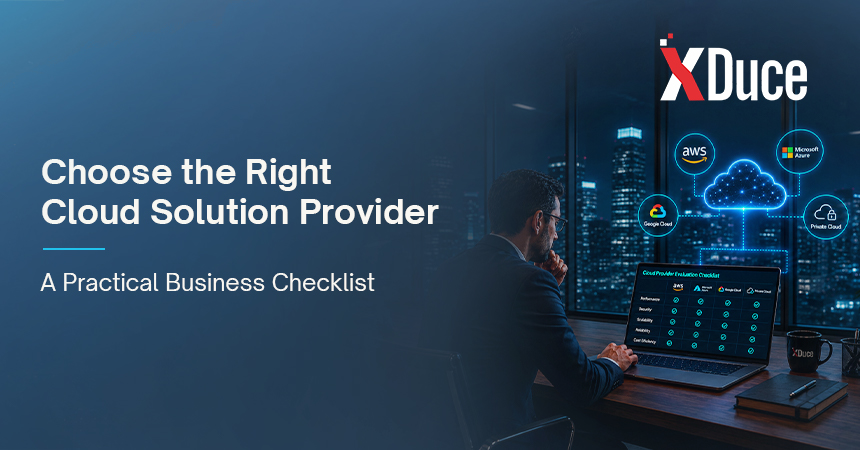
Picking a cloud solution provider is not that different from hiring a key employee. You are trusting an outside team with your infrastructure, your data, and in many cases your uptime. Get it right and the partnership quietly runs in the background while your business grows. Get it wrong and you are stuck migrating everything again in eighteen months, this time under pressure.
The market does not make this easier. There are large global system integrators, boutique specialists, and everything in between, all claiming similar expertise. Without a structured way to compare them, it is easy to end up choosing based on who gave the smoothest sales pitch rather than who can actually deliver.
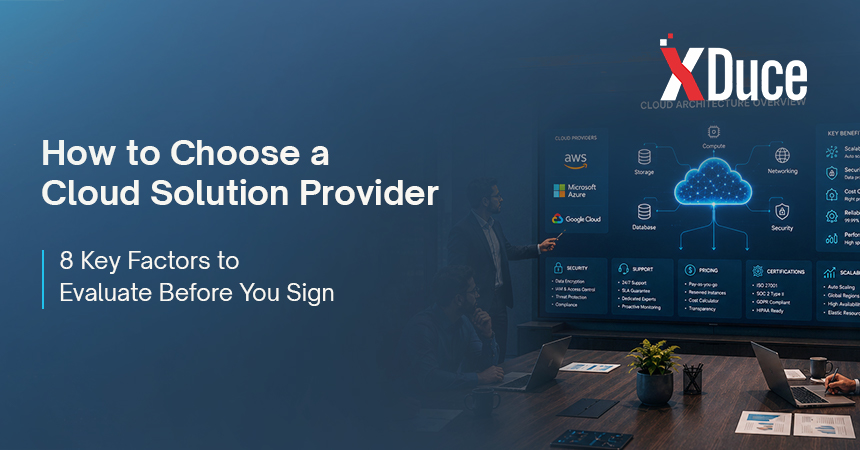
This checklist covers what actually matters when comparing a cloud services provider against another, from technical certifications down to how they handle a 3 a.m. outage call. Use it before you sign anything.
1. Start With Your Own Cloud Goals, Not the Provider’s Pitch Deck
Before comparing vendors, write down what you actually need. Are you migrating for the first time, modernizing legacy applications, or looking for ongoing managed cloud services? A provider that is excellent at greenfield builds is not automatically the right choice for a complex legacy migration, and vice versa. Clarity here makes every other step on this checklist easier.
It also helps to separate must-haves from nice-to-haves early. A business migrating a handful of internal tools has very different requirements than one moving a customer-facing platform that cannot go down during business hours. Write both lists down before the first vendor call, not after.
2. Check Platform Certifications and Hands-On Expertise
A cloud computing service provider that talks in generalities rather than specifics about past projects is worth a second look before you commit. Ask directly:
- Which platforms is the team certified on: AWS, Azure, Google Cloud, or a combination
- How many migrations of similar size and industry have they actually completed
- Can they name the tools and frameworks they use for architecture and deployment
3. Evaluate Their Security and Compliance Posture
Security should never be a bullet point buried at the bottom of a sales deck. Before signing, confirm:
- Whether they have a dedicated cloud security consultant on staff
- How they handle identity and access management
- Which compliance frameworks they have real experience with, such as SOC 2, HIPAA, or PCI DSS depending on your industry
- How often they run vulnerability scans and who reviews the results
4. Understand the Managed Services and Support Model
Find out exactly what happens after the migration is done. Some providers hand you the keys and disappear. Others include full managed cloud services with ongoing monitoring and a real person to call during an incident. Get these in writing before you sign:
- Support tiers offered and what each one includes
- Guaranteed response times for critical incidents
- Whether monitoring runs 24/7 or only during business hours
- Who owns patching and routine maintenance going forward
5. Ask About Backup and Disaster Recovery Capabilities
A strong backup and disaster recovery service is non-negotiable, not an upsell. Ask how often backups run, where they are stored, and how quickly the provider can restore operations if something fails. This is one area where a vague answer should be a red flag.
Two numbers matter most here: recovery time objective, how long restoring service actually takes, and recovery point objective, how much data you could lose in the worst case. Any provider who cannot give you specific numbers for both has probably not tested their own process.
6. Compare Offerings for Enterprises vs. Small Businesses
The right fit depends heavily on your size. Cloud services for enterprises typically involve custom SLAs, dedicated account management, and multi-region redundancy. Cloud services for small business should be simpler and faster to deploy, without paying for enterprise complexity you do not need. Make sure the provider has genuine experience serving businesses your size, not just logos on a homepage.
A quick way to test this: ask for two or three client examples close to your own size and industry. A provider that mostly serves Fortune 500 companies may over-engineer a small business environment, while a provider built for small teams may not have the depth for a complex enterprise rollout.
7. Review Pricing Transparency
Cloud costs have a reputation for creeping upward after the contract is signed. A trustworthy cloud solution provider will walk through pricing in plain terms, including what happens as your usage scales, rather than leaving you to discover the real cost on your first invoice.
Ask specifically what triggers additional charges, whether that is extra storage, higher compute usage, additional support tickets, or after-hours incident response. Get this in writing rather than relying on a verbal estimate from the sales call.
8. Ask for Case Studies and References
Any provider worth hiring should be able to point to real client results, ideally in your industry or at a similar company size. A quick reference call can surface issues, like slow support response times, that never show up in a sales pitch.
When you do get a reference call, ask what went wrong during the engagement, not just what went right. Every project hits friction somewhere. How the provider handled that friction tells you more than a polished success story ever will.
Red Flags That Should Make You Pause
A few warning signs tend to show up when a provider is not going to be a good fit:
- Vague answers about certifications or past project scope
- No clear answer on recovery time or recovery point objectives
- Pricing that is only explained verbally, never in writing
- Reluctance to provide references or case studies close to your industry
- A sales process that pushes for a signature before a proper discovery call happens
Questions Worth Asking on the First Call
Beyond the checklist itself, these questions tend to separate serious providers from the rest:
- What does a typical onboarding timeline look like for a business our size
- Who will actually be on our account day to day, not just during the sales process
- What happens if we need to scale support up or down after the contract starts
- How do you handle a security incident, step by step
- What is your average client retention rate, and can you explain why clients have left in the past
A Simple Scoring Approach for Comparing Providers
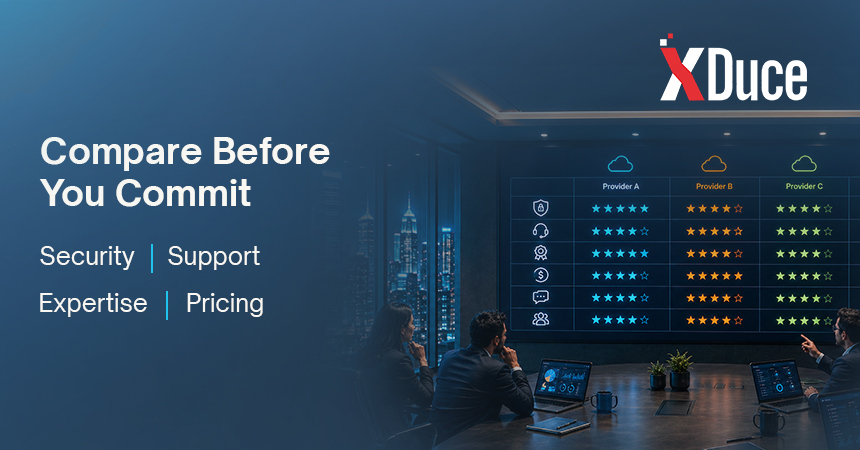
Once you have two or three finalists, a simple weighted scorecard makes the comparison less subjective than going on gut feel alone:
| Criteria | Weight | What to Look For |
|---|---|---|
| Security and compliance | High | Dedicated cloud security consultant, relevant compliance experience |
| Support model and response time | High | Written SLAs, 24/7 coverage if your business needs it |
| Platform certifications | Medium | Verified certifications on the platform you plan to use |
| Pricing transparency | Medium | Clear cost breakdown, no vague usage-based surprises |
| Cultural and communication fit | Medium | Responsive, clear communication during the sales process itself |
| References and case studies | Low to medium | Verifiable results from businesses similar to yours |
Score each finalist against these criteria, weighting security and support most heavily, since those two categories tend to cause the most regret when overlooked in favor of a lower price.
What to Expect During Onboarding Once You Choose a Provider
The evaluation process does not end the moment you sign a contract. A well-run onboarding typically includes a kickoff call to confirm scope and timelines, an initial infrastructure audit to validate what the sales team assumed during the pitch, and a documented migration or management plan with clear milestones. If a provider skips straight to work without any of these steps, that is often a preview of how the rest of the relationship will run.
How Switching Providers Later Actually Works
Choosing well the first time matters, but it is worth knowing that a poor fit is not necessarily permanent. Businesses do switch cloud solution providers, though it is more disruptive than switching most other vendors because of how deeply infrastructure access is woven into daily operations.
Before signing with any provider, ask what the offboarding process looks like if the relationship ends. A provider confident in their own work will have a clear answer, including how quickly they can hand over documentation, credentials, and architecture diagrams to a new team.
Checklist Summary
Before you sign a contract with a cloud solution provider, confirm you have clear answers on all eight points:
- Your own goals for the engagement
- Platform certifications and hands-on expertise
- Security and compliance practices
- The ongoing managed services and support model
- Backup and disaster recovery capabilities
- Whether their experience matches your company size
- Transparent, scalable pricing
- Verifiable case studies and client references
Making the Final Decision
After running through the checklist, the scorecard, and reference calls, most businesses find the decision becomes fairly clear. If it does not, that is usually a sign one of two things is happening: either two providers are genuinely close enough that either would work fine, or none of the finalists fully answered your must-have questions and it is worth widening the search rather than settling.
Whichever provider you choose, put the agreed scope, support tiers, response times, and pricing terms in writing before work begins. A verbal understanding from the sales process is not the same as a signed agreement, and the gap between the two is where most post-contract disputes start.
Frequently Asked Questions
Security and support model tend to matter most long term. A provider with strong certifications but a weak support commitment can leave your business exposed during an outage.
It depends on your existing environment. If you are already committed to AWS or Azure, a specialist can go deeper. If you expect a multi-cloud setup, look for a cloud computing service provider with proven experience across platforms.
Ask each provider to walk through a realistic usage scenario for your business rather than comparing base package prices, since cloud costs scale with usage and support tier.
The evaluation criteria are similar, but small businesses should weigh simplicity and predictable pricing more heavily, since cloud solutions for small businesses rarely need enterprise-level complexity.
Most businesses spend two to six weeks evaluating providers, enough time to complete reference calls and compare at least two or three detailed proposals.
Ask what went wrong during the engagement, not just what went right, since every project hits friction somewhere and how a provider handled it is more revealing than a polished success story.
It depends on your needs. Larger providers often bring more resources and redundancy, while smaller specialist firms can offer more hands-on attention and flexibility. Match the provider’s size and focus to your own company size and complexity.

Related Blogs